
TYPES OF PAVING BRICKS
FOR DRIVEWAYS: A CAPE TOWN GUIDE
Five materials, five different answers to Cape Town’s rain and UV — chosen by climate fit and home style, not just looks.
Most guides to paving materials read like a product list: five options, five photos, pick whichever one you like the look of. That works fine if you’re choosing a tile for an indoor floor. A driveway is outdoors, permanently, in a Cape Town climate that swings from sustained winter rain to intense summer UV every single year. That swing affects each of these materials differently, not just in how they look but in how they hold up.
This guide covers the same five materials you’ll find installed on driveways across the city, with the climate question answered honestly for each one, plus a straightforward read on which suits which kind of home.
Clay Brick

Clay brick is the classic choice, and for good reason: it’s genuinely well suited to Cape Town’s seasonal swings, handling everything from heavy winter rain to intense summer sun without the material itself degrading. It’s available in a range of shades and sizes, and its biggest practical advantage is that the colour is fired into the brick rather than sitting on the surface, so it doesn’t fade the way some materials do over years of UV exposure.
Stylistically, clay brick reads as warm and classic. It suits older homes, character properties, and anywhere a traditional look is the goal more naturally than it suits a stripped-back modern build.
See clay brick paving installed on real Cape Town driveways for a closer look at the finish.
Interlocking Brick Pavers
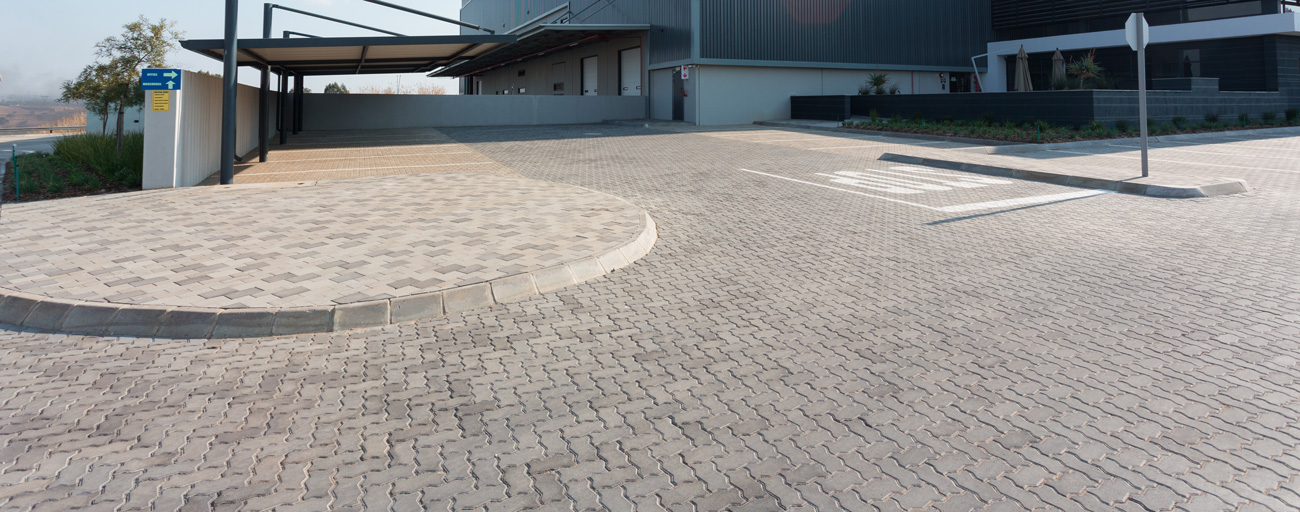
Interlocking pavers are built around structural stability. The interlocking shape helps prevent individual pavers from shifting under load, which matters directly for a driveway carrying a vehicle’s weight and the turning force of the wheels day after day. They’re also available in a wide range of laying patterns, which gives more design flexibility than a material with only one realistic installation pattern.
This is a genuinely versatile option stylistically. The pattern and colour choice can push it toward either a clean modern look or a more traditional one, which makes it a safe choice when you’re not entirely sure which direction you want to go.
Take a look at interlocking paver driveways we’ve installed to see the range of patterns in practice.
Bond Pavers

Bond pavers are laid in a tightly fitted pattern that creates a strong, interlocked surface resistant to movement. A good option for homeowners who want both durability and a refined finished look without sacrificing one for the other. The precise, structured laying pattern gives a bond paver driveway a slightly more deliberate, tailored appearance than a standard interlock layout.
This one sits well on homes where the driveway needs to look considered rather than purely functional. A bond-paver entrance reads as more finished, which suits a home where kerb appeal matters as much as durability.
Browse bond paver driveways for examples of the finish this pattern produces.
Cobbled

Cobblestone brings a genuinely different character to a driveway: elegant, traditional, and immediately recognisable, while still delivering the durability of modern paving construction underneath. It’s the material most likely to make a driveway itself a design feature rather than just a functional surface.
Stylistically, cobble leans traditional and works particularly well on period homes, estate-style properties, or anywhere the goal is a driveway that feels established rather than newly laid.
Explore cobbled driveway paving to see how this finish reads in person.
Exposed Aggregate

Exposed aggregate gives a distinctly textured, contemporary finish. The small stone aggregate embedded in the surface catches light differently to a flat paver, giving a driveway a more tactile, modern appearance. It’s the option most likely to suit a home that’s already leaning toward a clean, minimal architectural style rather than a traditional one.
If your home’s exterior is already modern, exposed aggregate is usually the material on this list that matches it most naturally. See our styling and colour guide for how this finish sits alongside the others.
Matching Material to Your Home’s Style
As a rough guide: clay brick and cobble both lean traditional and suit character homes, older properties, and anywhere a warm, established look is the goal. Interlocking and bond pavers sit in the middle. Genuinely flexible enough to work with either a traditional or contemporary home, largely because the laying pattern and colour do most of the stylistic work. Exposed aggregate leans firmly modern and suits homes that are already built in a clean, minimal style.
None of these are hard rules. A lot of the final look comes down to colour choice and laying pattern within each material. But it’s a reasonable starting point before you narrow things down further.
Cost Tier, in Relative Terms
Relative cost between these five comes down mostly to two things: how much raw material a finish uses, and how long it takes to lay well. As a general rule, simpler interlocking patterns are the most budget-accessible starting point, while finishes that take longer to lay carefully, cobble in particular, and detailed bond-paver patterns sit toward the premium end. Clay brick and exposed aggregate typically land somewhere in between, depending on the specific pattern and finish chosen. The only way to know where your own project lands is a quote against your actual driveway, since size, access and pattern complexity all move the number as much as the material does.
Maintenance Differences
Clay brick and cobble are both low-maintenance day-to-day since their colour doesn’t fade, though joints on any of these five will eventually need re-sanding as a normal part of upkeep. Interlocking and bond pavers are straightforward to maintain and easy to spot-repair if a single paver needs replacing. Exposed aggregate benefits from periodic sealing to keep the aggregate texture looking sharp and to make the surface easier to clean.
Getting the Right Material for Your Driveway
The honest answer is that all five of these hold up well in Cape Town when installed properly. The bigger factor in how long any of them lasts is the base underneath, not which one you pick. If you’re still weighing up which suits your home, request a free driveway quote, and we’ll talk through which of these fits your property, your budget, and the look you’re after.
Ready to Choose the Right Material for Your Driveway?
Free site consultation, a written breakdown of what’s included, and no obligation — we’ll come to you.
Get A Free Quote Today!